 is your investment to the Victory and future of Ukraine


23.02.2026
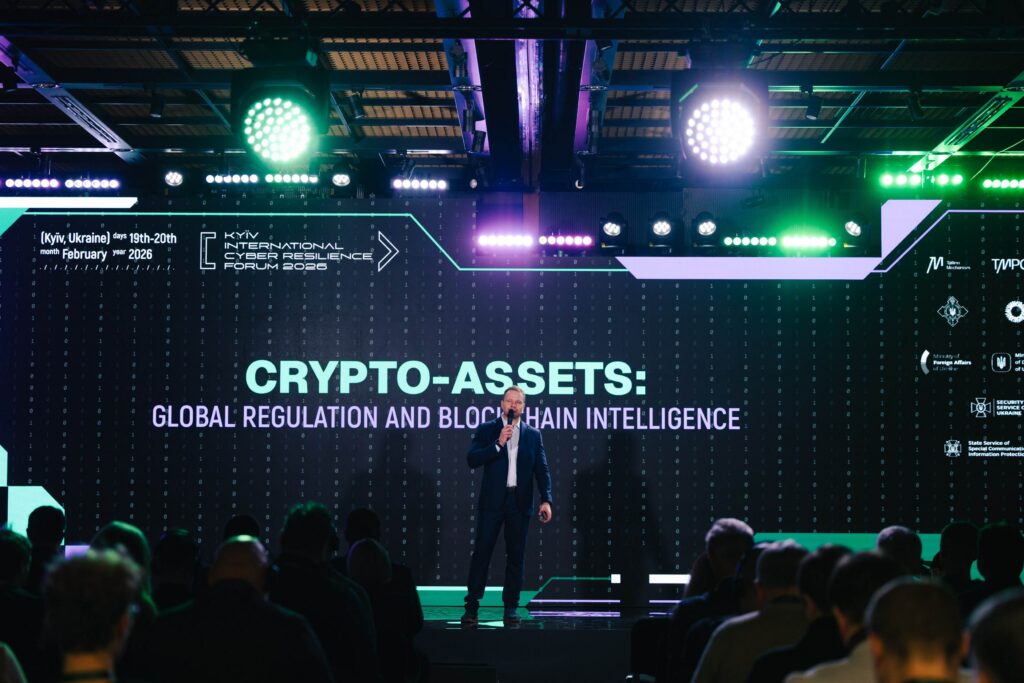
Oleksii Semeniuk, Chairman of the National Securities and Stock Market Commission, took part in the Kyiv International Cyber Resilience Forum 2026.
During his speech at the panel discussion “Crypto assets: global regulation and blockchain analytics,” he presented key legislative initiatives of the NSSMC aimed at strengthening financial stability, cyber security, and the development of a modern digital market infrastructure.
In particular, the NSSMC Chairman announced that all amendments taken into account during the first reading of the draft law on virtual assets are expected to be finalized next month. After that, the document will be submitted for consideration in its final version.
According to him, a draft law on the implementation of the provisions of the Digital Operational Resilience Act (DORA) is currently being prepared.
“It is going to be submitted for consideration this summer. This international act provides for a comprehensive approach to risk management and includes three key aspects: identifying and assessing risks, defining algorithms for action in the event of cyber threats—from hacker attacks to other incidents, clear mechanisms for business entities to respond quickly to eliminate the consequences of attacks and restore stable operations,” said Oleksii Semeniuk.
In addition, the Chairman of the NSSMC noted that a draft law on Digital Ledger Technology (DLT) is planned to be submitted by the end of this year.
“Third point. By the end of 2026, another bill is planned to be submitted — on Digital Ledger Technology (DLT). Its purpose is to provide market participants with the opportunity to trade shares and other securities, as well as to carry out transactions with virtual assets using a simplified system — an alternative to the current depository model.”
Separately, Oleksii Semeniuk supported the initiative of involving experts and the professional community in discussions and cooperation on the initiatives of the NSSMC.
“The opinion of experts and the professional community is important to us, because together we must make these draft laws and decisions effective,” the Chairman concluded.
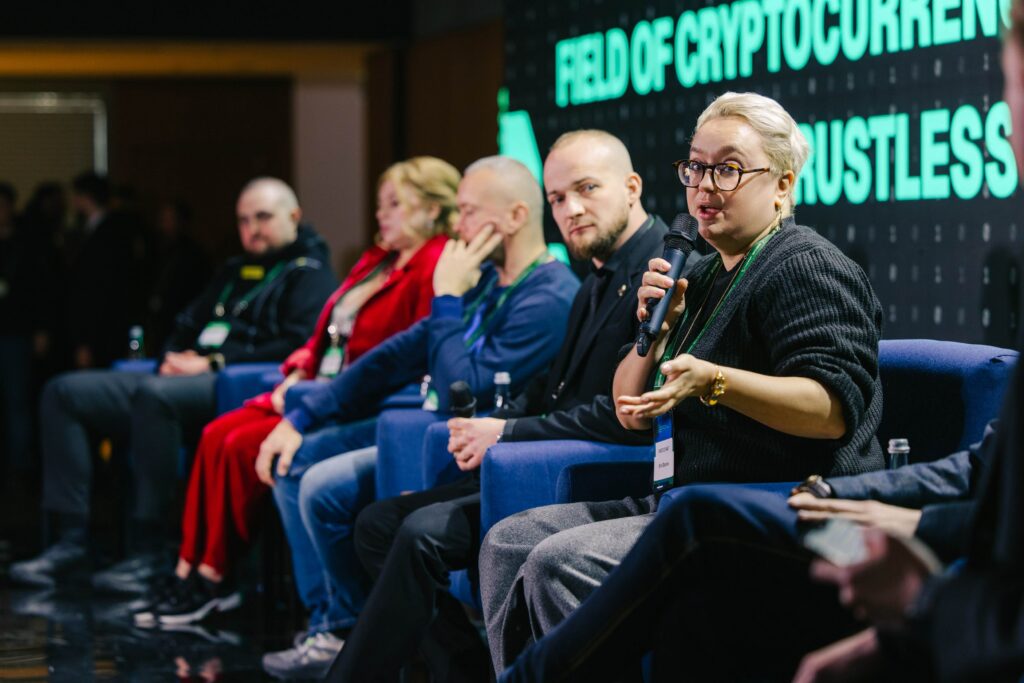
Vita Forsiuk, legal advisor to the NSSMC, also took part in the forum. During the panel discussion “Legal Framework and Challenges in the Field of Cryptocurrencies — Digital Trust in a World Without Trust,” she emphasized that the key objective of regulation is protection of non-professional investors, who are most vulnerable to financial fraud and unfair practices in the crypto market.
“Why does the state propose to regulate the activities of professional providers? Because they interact with non-professional investors. When risks of financial fraud or the spread of misinformation emerge in the market, the state must respond in order to protect the investors. Regulation is not intended to complicate the work of market participants; it is aimed at ensuring an adequate level of investor protection for those investors who, due to the complexity of procedures, are not always able to assess the risks on their own,” she noted.
Separately, Vita Forsiuk focused on the preparation of a draft law on virtual assets and noted that work on the document remains active and challenging.
“Most panels discuss two things. The first is taxation. Everyone asks: what will the rate be? But there is another, much more complex issue—how market infrastructure and civil law relations should be regulated. It is these issues that should be subject to state regulation of the market and be properly regulated,” she noted.
According to her, the draft law covers issues related to the acquisition and transfer of ownership rights to virtual assets, inheritance, seizure of assets, and other transactions on the crypto market.
Discussions are also ongoing regarding the final model for regulation and the division of powers between the regulators. According to her, the discussion is complex because the concept of the draft law has undergone changes, and a search is currently underway for compromises that would take into account positions of all parties.
She also noted that under martial law, regulation of the virtual asset market must take into account issues of currency stability and financial security of the state.
In addition, the advisor mentioned an initiative to develop a legal framework for the application of DLT technology to securities, noting that this is an important step toward enabling trading in tokenized bonds.
Зв'язатися з нами