 is your investment to the Victory and future of Ukraine


16.10.2026
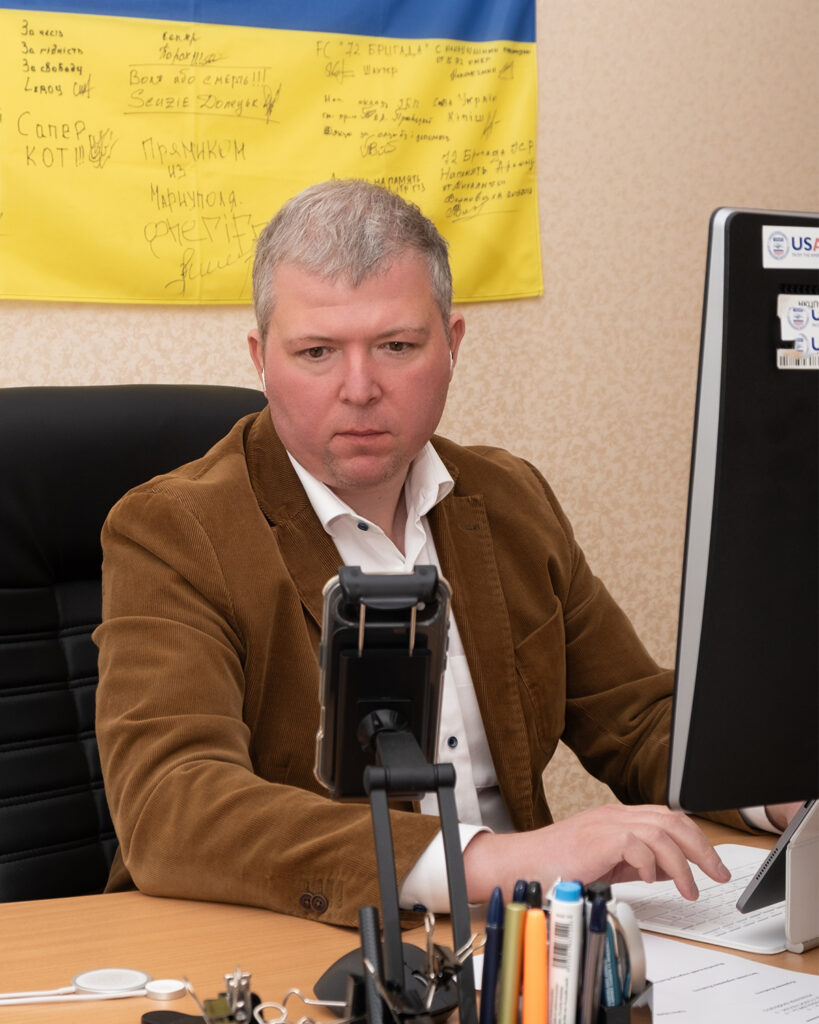
NSSMC Commissioner Arsen Ilin held a working meeting with representatives of Finanstilsynet, Norway’s financial supervisory authority. The sides discussed the Ukrainian regulator’s experience in ensuring institutional continuity and resilience during wartime.
The full-scale war forced the Commission to tackle challenges for which it was impossible to be fully prepared in advance. The war has been ongoing since 2014, so there was a certain level of preparedness. The Commission had to operate amid daily security risks, infrastructure damage, power outages, and cyber threats.
Norwegian colleagues highly commended the Commission for its success in keeping the market functioning. Representatives from Finanstilsynet asked about the operation of exchanges, the retention of critical staff, the possibility of moving certain IT services abroad or to the cloud, the organization of supervision, resilience centers, regional offices, communication with citizens, and efforts to counter misinformation.
During the conversation, Arsen Ilin explained how the Commission adapted its work to these challenges. In particular, at the start of the full-scale invasion, the Commission, together with the National Bank, tightened controls on capital outflows. At the same time, the government launched a large-scale fundraising effort through bonds. To enable citizens to quickly invest in government securities, the Commission and market participants leveraged existing digital infrastructure, and professional participants significantly improved their applications; among other things, the functionality of the Diia app was expanded.
Another area of focus is the flexibility of oversight. The Commission allowed licensed companies operating in the occupied territories to relocate their operations to safer regions and exempted them from reporting requirements for two months. Onset of the full-scale war also led to the suspension of on-site inspections. Supervision was shifted entirely to remote format — using documents and data that the regulator can obtain from other sources. This approach is still in place, but starting next year, on-site inspections will resume in certain cases. It is noteworthy that Norwegian colleagues reported that they, too, conduct supervision primarily remotely and rarely visit sites in person.
At the start of the war, the assessment of professional suitability for officials serving at professional participants in the capital markets was also suspended. Only those who had been assessed previously were allowed to continue working, while new appointees were subject to a subsequent review. In 2026, the Commission reinstated this assessment for executives, chief accountants, and members of supervisory boards. It is conducted remotely using specialized software.
Market resilience requires a stable infrastructure. Therefore, the Commission has ensured the availability of backup IT capacity, relocated its main servers from Kyiv to another region, and installed an industrial generator. Market participants who work with the regulator have access to resilience centers. For example, the National Depository has such a center, and, at the initiative of the National Bank, a unified network of Ukrainian bank branches has been created; these branches are equipped with alternative energy sources and backup communication channels, enabling them to operate reliably and provide financial services even during prolonged power outages.
The Commission approved criteria for its licensees to designate a business as having critical importance to the country, which has made it possible for them to exempt men subject to military service and allowed businesses to continue their operations.
According to Arsen Ilin, trading on stock exchanges was suspended for several months only at the start of the full-scale invasion. However, government bonds remained in circulation during this time. After professional capital market participants resumed operations, trading volumes in financial instruments were significantly lower and returned to normal levels in mid-2023.
During the meeting, they separately discussed communication with citizens and countering disinformation. If information related to supervisory activities is received, the Commission first verifies whether it is accurate. If so, it responds and, if necessary, issues a rebuttal. According to Arsen Ilin, trust in the financial regulator is built primarily on its ability to function on a daily basis: to maintain access to its services, respond to inquiries, and address investors’ concerns.
For the Commission, this exchange is important not only as an opportunity to share Ukraine’s best practices. The Norwegian regulator operates within the European financial space and has its own experience in ensuring the stability of the financial system. Therefore, professional dialogue helps compare approaches, find common solutions, and strengthen regulators’ ability to respond to new risks.

Зв'язатися з нами