 is your investment to the Victory and future of Ukraine


31.07.2026
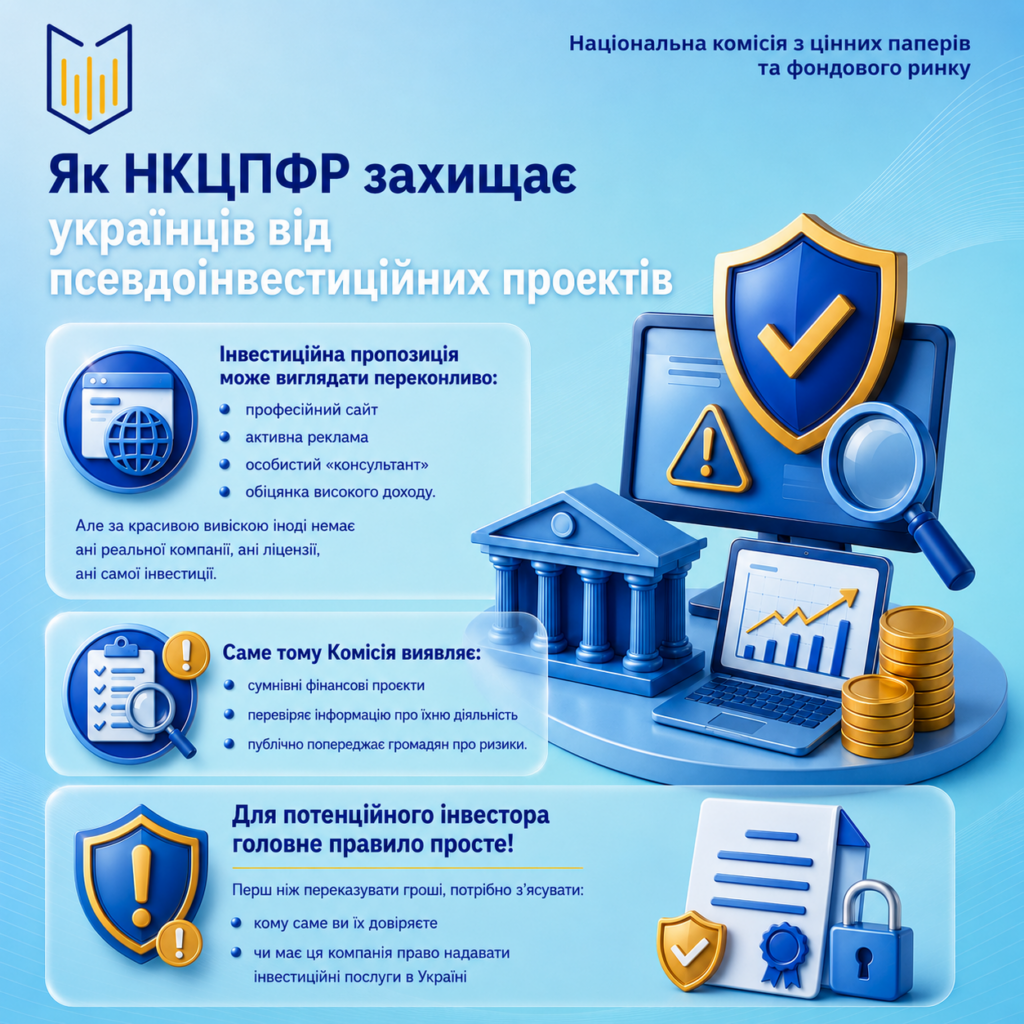
A professional website, aggressive advertising, a personal “advisor,” and the promise of high returns can create the impression of a reputable investment company. But behind the pretty facade, there is sometimes neither any actual business activity, nor any investments, nor any intention to return the funds invested. That is why it is important to recognize the signs of fraud before making your first money transfer.
How can you tell if someone is trying to get you involved in a shady project?
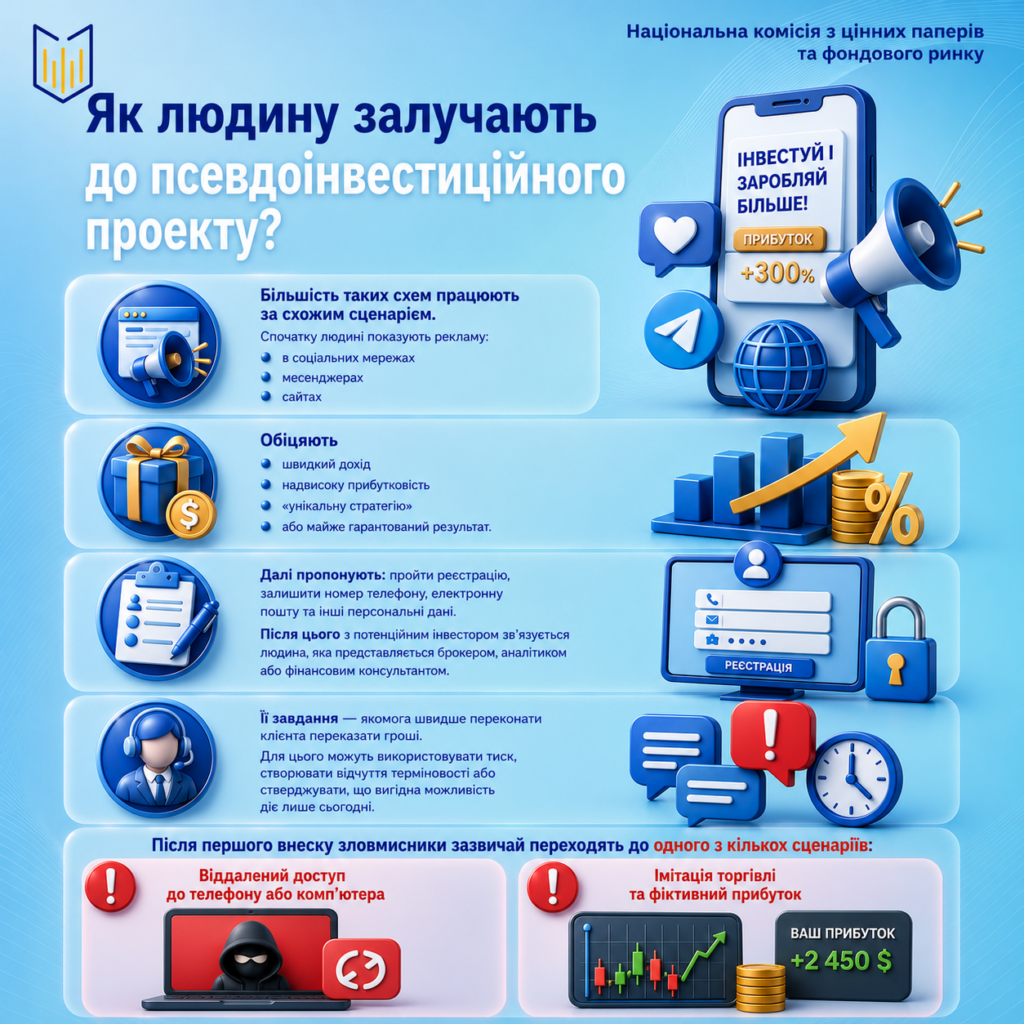
Most of these schemes start the same way: a person sees an ad on social media, messaging apps, or websites. They’re promised quick returns, high profits, and minimal risk.
After registering, a “broker,” “analyst,” or “financial advisor” contacts the user. This person constantly calls or texts, guides the user through every step, sends instructions, and urges the user to make the first deposit as soon as possible.
You should get alarmed in case of:
• promises of guaranteed or unreasonably high returns;
• calls to act immediately;
• psychological pressure and persistent phone calls;
• constant pleas to increase the investment amount;
• a reluctance to clearly explain how the investment works and what risks it entails.
If all communication comes down to getting you to transfer money as quickly as possible, rather than helping you understand exactly where you’re investing, that’s a serious cause for concern.
You are being asked to perform actions that you don’t understand
One common scam involves a fraudster guiding your actions step by step under the guise of offering help.
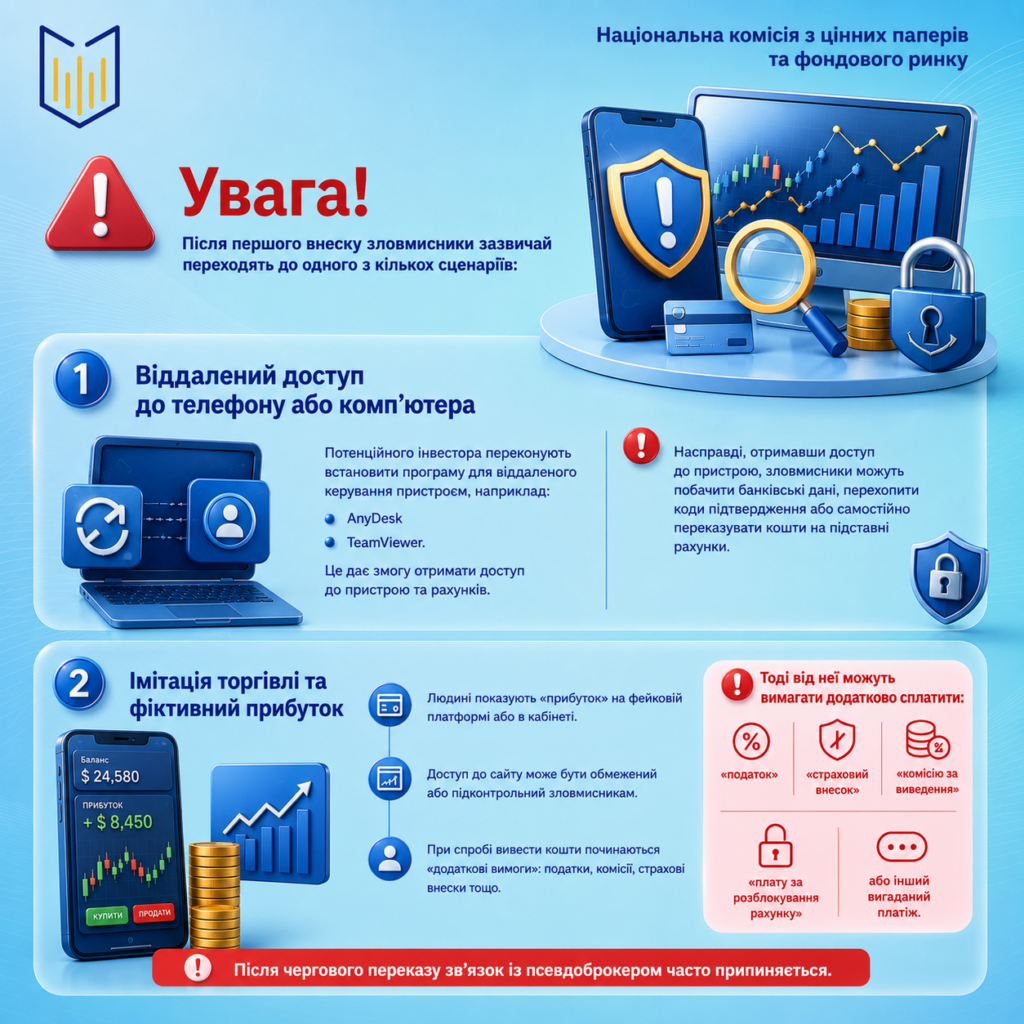
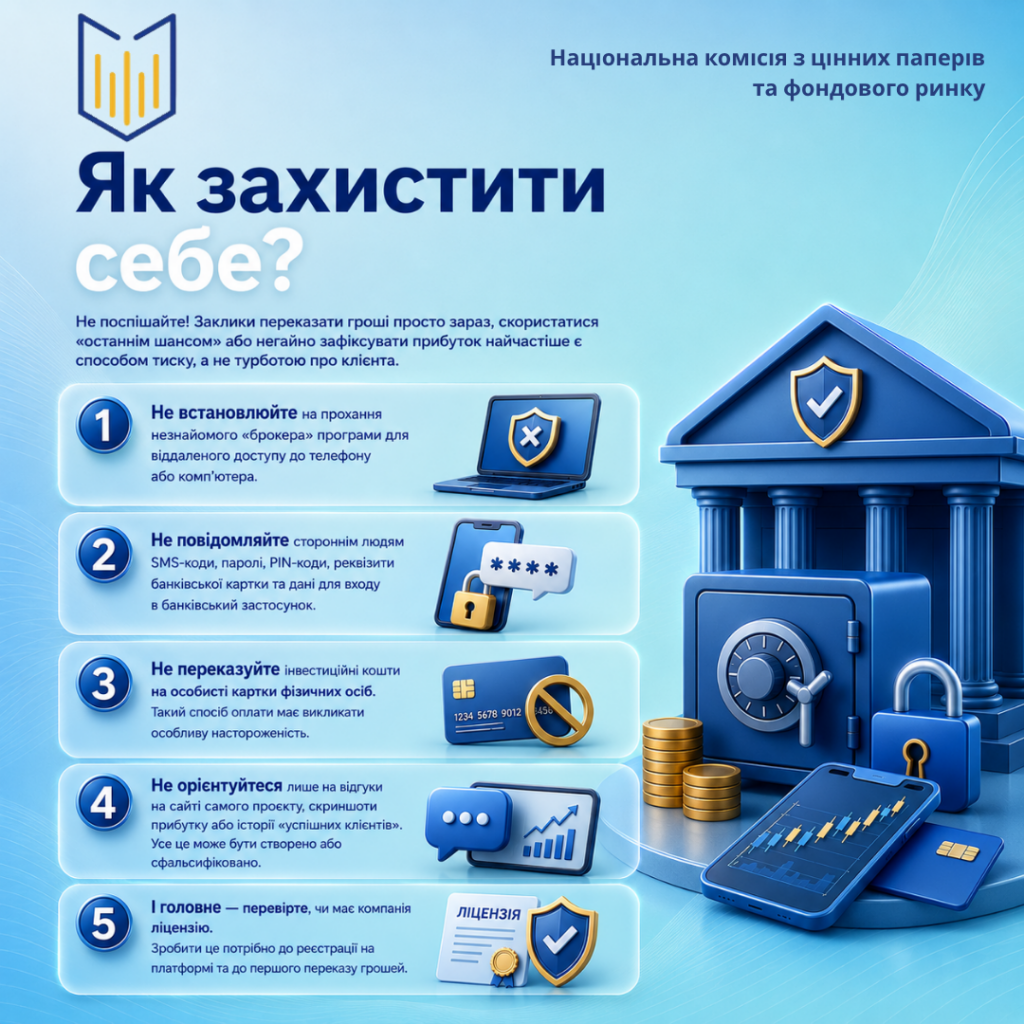
You may be asked to install a remote access program, such as AnyDesk or TeamViewer, on your phone or computer, supposedly to help you with registration or your first investment. In reality, this could give unauthorized individuals access to your device, banking apps, and personal data.
Another scenario is when you’re asked to sign up for a well-known platform or exchange, and then, step by step, you’re redirected to third-party services or e-wallets that are no longer associated with that platform. That’s where you can lose control of your funds.
Remember: a reputable financial intermediary will not ask you to grant remote access to your device or perform actions you don’t understand without clearly explaining their purpose.
The screen shows a profit, but the money cannot be withdrawn
After making their first deposit, users are granted access to a website or app that supposedly shows successful transactions and steady profit growth.
Such data might not have anything to do with actual transactions. As long as the investor sees “returns,” they are persuaded to invest more and more.
When a person tries to withdraw funds, they are asked to make additional payments: a “tax,” a “withdrawal fee,” an “insurance premium,” a “verification fee,” or an “account unlocking fee.” After making yet another payment, the money is usually not returned, and all contact with the scammers ceases.
Which scams are used most often?
Among the most common are:
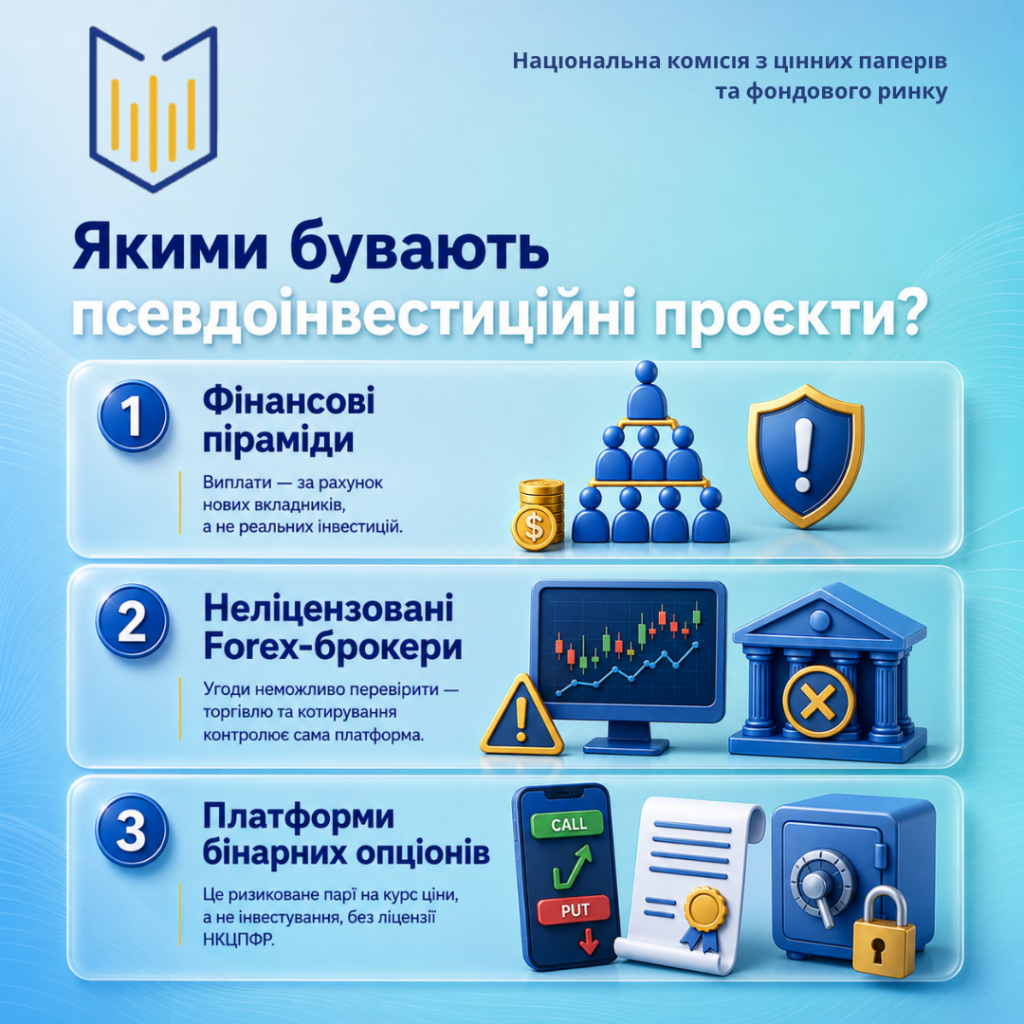
• Ponzi schemes, where payouts are made using contributions from new participants;
• pseudo-brokers, who merely simulate investment activities;
• dubious Forex and binary options platforms, where clients cannot verify whether actual operations are being carried out;
• fraudulent projects in the virtual assets sector, where, under the guise of investment, people are persuaded to transfer crypto assets to third-party wallets or platforms, after which they lose access to their funds.
Despite their different names, most of these schemes work the same way: first, they win a person’s trust, and then they convince that person to transfer more and more money.
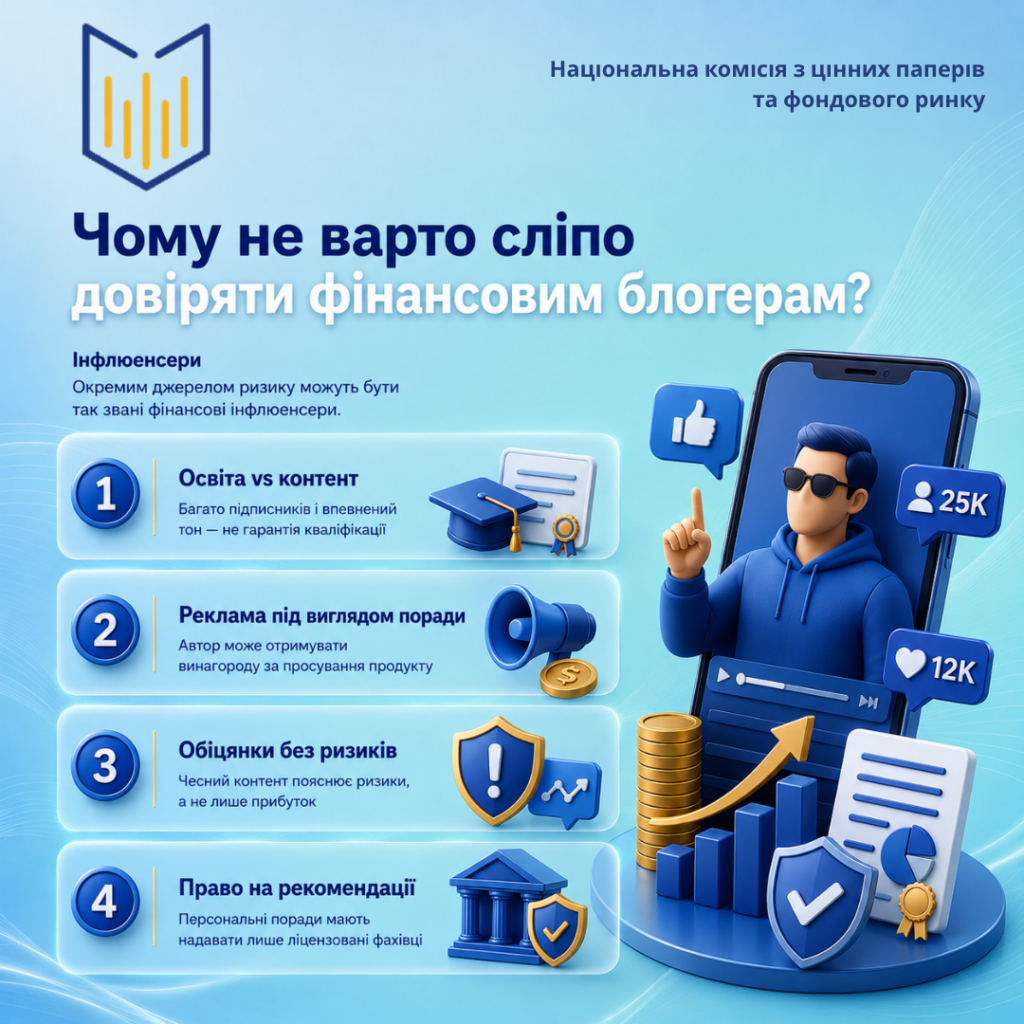
Can you trust the advice of financial bloggers?
A large number of subscribers, professional-quality videos, and a confident speaking style do not guarantee the author’s competence or integrity.
Financial bloggers can combine educational content with advertisements for certain companies or platforms.
So, pay attention to whether a post is labeled as an advertisement, whether the author explains the risks, and whether they promise guaranteed returns.
What to check before transferring funds?
Before investing, ask yourself a few questions:
• Do I understand exactly where I’m putting my money?
• Who is promising a return, and on what basis?
• Are they explaining the risks to me, not just the potential return?
• Why am I being pressured to hurry?
• Am I being asked to perform strange actions or install third-party software?
If there isn’t a clear answer to at least one of these questions, it’s best to avoid such an investment.
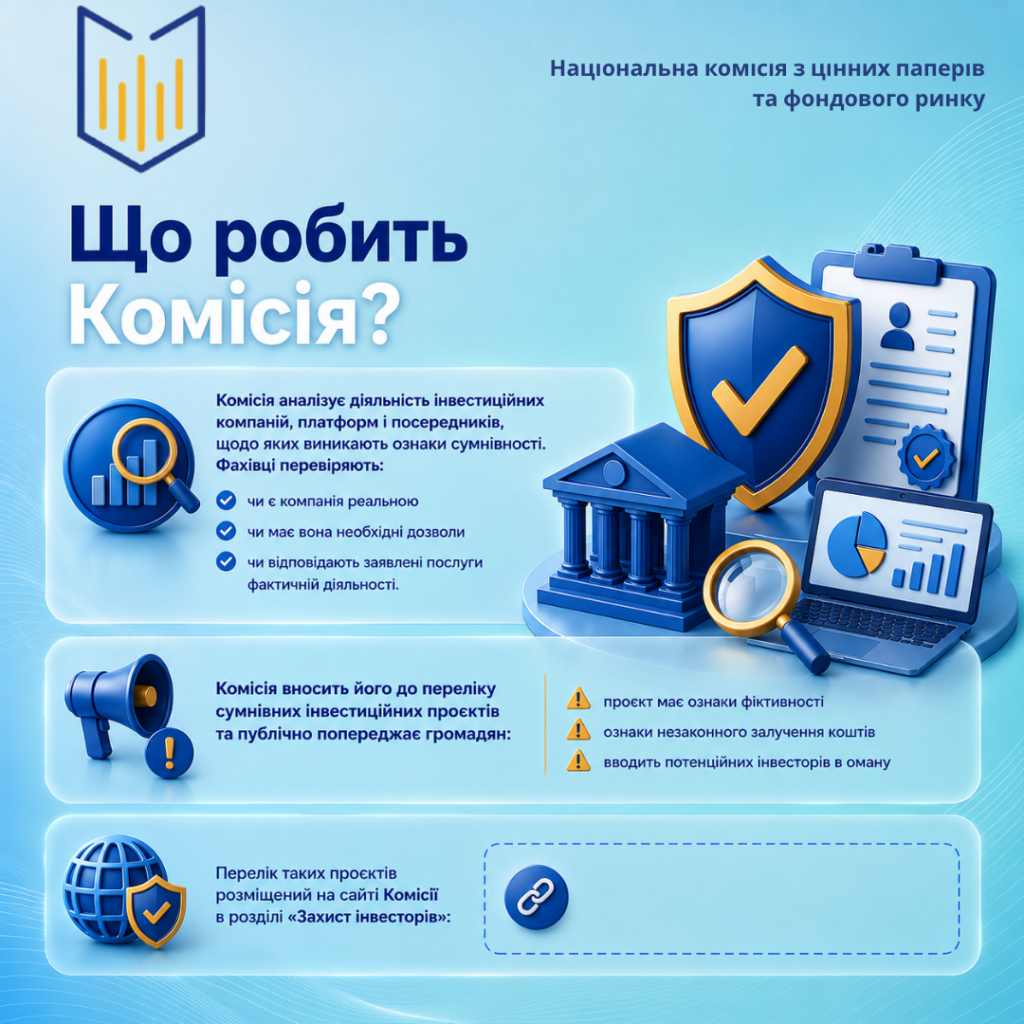
What does the Commission do?
The Commission analyzes information about investment companies, platforms, and intermediaries that show signs of dubious activity.
If a project shows signs of illegal solicitation of funds or misleads potential investors, the Commission adds it to a list of dubious investment projects and publicly warns citizens about the risks.
The list of dubious investment projects is available on the Commission’s website in the “Investor Protection” section.
Investment fraudsters count on the victim’s haste, trust, and desire to make a quick profit. Therefore, don’t rush into a decision, verify information, and don’t take any actions if you don’t understand their nature or consequences.
Зв'язатися з нами