 is your investment to the Victory and future of Ukraine


01.09.2026
The capital market should become an ecosystem that brings together the government, communities, businesses, and investors around specific economic projects. The Commission sees its role not only in regulating this market but also in creating an environment where those who need capital can meet those who are ready to invest it.
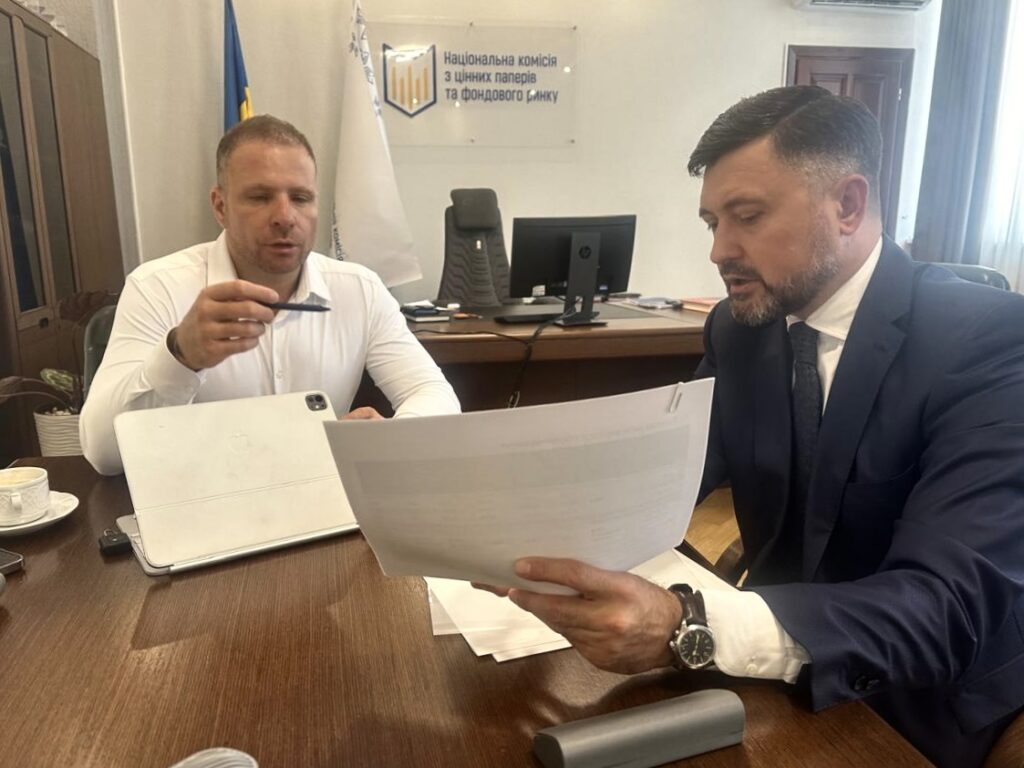
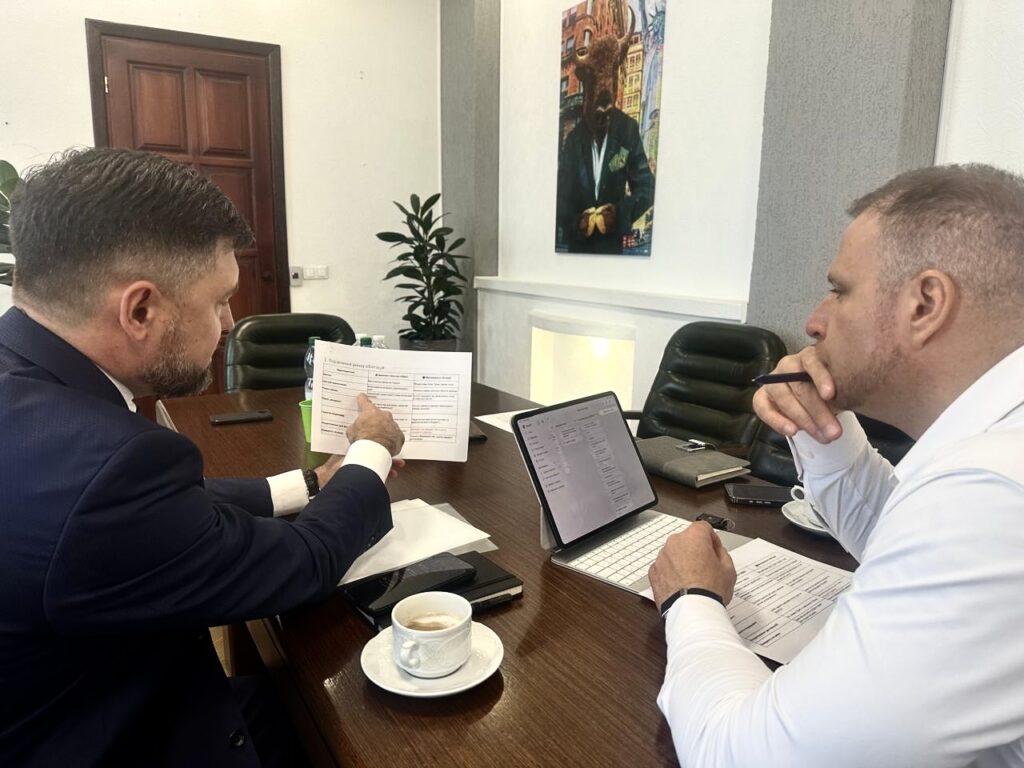
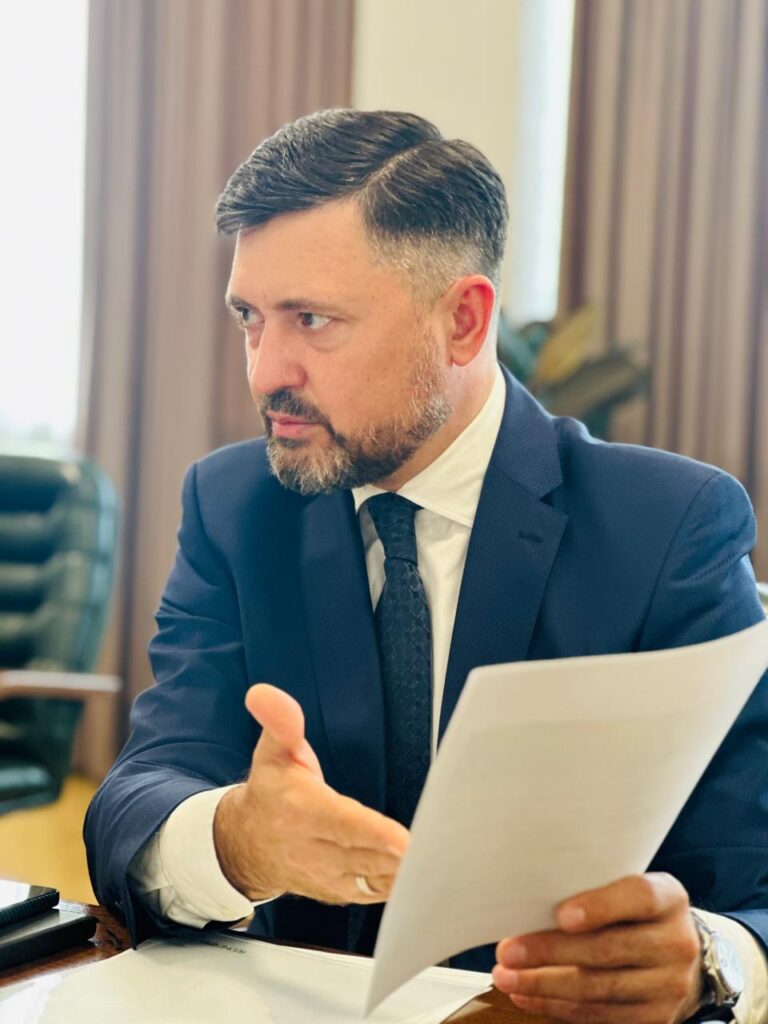
This was stated by Oleksii Semeniuk, Chairman of the National Securities and Stock Market Commission, during a meeting with Vadym Boichenko, Mayor and Head of the Mariupol City Military Administration. They discussed the possibilities of using capital market instruments to finance social and affordable housing, particularly for Ukrainians who have lost their homes due to the war.
“Municipal bonds are one link in a large chain known as the capital market. Our goal is to build a fully-fledged ecosystem and bring into it everyone who can help create it alongside us. The Commission should be more than just a regulator. First and foremost, we must serve as a service provider and a platform where businesses in need of financing, communities with their projects, and legal or private investors with capital can turn. And our task is to set up clear rules and tools that will allow this capital to work for the economy,” said Oleksii Semeniuk.
One practical example of such cooperation is the “My Home. Ukraine” project, which is being implemented by Mariupol. It involves the creation of social and affordable housing for people who have lost their homes due to the war.
The first project is planned for implementation in Bila Tserkva: 16 apartment buildings with a total of 1,200 apartments. According to the financial model presented during the meeting, the total cost of this phase is approximately UAH 3.3 billion, of which UAH 1.2 billion has already been allocated by the government.
At the same time, the scope of the project extends far beyond a single residential complex. The Mariupol CMA is considering the possibility of scaling the program to other cities, which will require additional sources of capital. One option is a model in which the government provides part of the funding, while the rest can be raised from external sources, such as loans or bonds.
“Housing is one of the key elements in bringing Ukrainians home and integrating IDPs into their communities. We must develop conditions under which people can obtain high-quality and affordable social housing, as well as work full-time and build a life in Ukraine. If we create conditions under which businesses can invest in such projects and recoup their investments over time, we are getting a win-win model: people stay in Ukraine, companies retain their teams, communities thrive, and the economy gains new momentum,” said Vadym Boichenko, Mayor and Head of the Mariupol CMA.
The possibility of attracting private capital was one of the central topics of the meeting. Both participants discussed municipal bonds as a potential instrument through which communities can secure funding for specific projects, while businesses and other investors will have a clear investment mechanism with defined terms for repayment.
For the Commission, this work is part of a broader dialogue with Ukrainian businesses regarding the development of the domestic capital market. The goal is to create conditions under which companies will be able not only to raise funds through bank loans but also to use capital market instruments to develop, scale up, and implement new projects.
At the same time, businesses can also act as investors. This is particularly relevant for companies that have relocated due to the war and are interested in the development of the communities where their production facilities are now based. Investments in housing and local infrastructure can help these companies retain their employees while also helping communities create new economic hubs.
During the meeting, the sides also identified a number of issues that are currently hindering the development of municipal borrowing. These include legislative restrictions on the amount of local debt, the specific nature of local communities’ powers under martial law, and banking requirements for transactions involving municipal bonds.
A separate discussion focused on identifying financial models that would allow not only a one-time raising of funds for construction but also the creation of a mechanism for refinancing future projects. In this context, the possibilities for the future use of securitization mechanisms were considered, in particular.
The Commission is ready to participate in the development of the financial and regulatory models for such projects and to provide the necessary expert support.
The next step should be a broader discussion involving local communities and the Ministry of Finance of Ukraine. The sides agreed to work toward involving not only large cities but also medium-sized and small communities, for which access to long-term financing is particularly important.
“We want to demonstrate, through specific projects, how the capital market can work — not just in theory, but when the funds raised are transformed into housing, businesses, jobs, and community development. This is precisely why we are building an ecosystem in which the Commission is ready to bring communities, businesses, investors, and the government together around one table and help find solutions,” emphasized Oleksii Semeniuk.
Зв'язатися з нами